
Video transcript
SCE changed its business rates on October 1, 2026. Here is what moved. Critical Peak Pricing is now optional. It is no longer the default.
There is also a new option for buildings with a battery on site. On TOU-GS-2 Option D, the summer on-peak demand charge fell from $39.60 to $25.40 per kW. But the summer peak energy price rose.
Some charges went down, and some went up. The net effect depends on your plan, your option, and how your building uses power. Read the full breakdown, with every tariff sheet cited, on our blog.
Southern California Edison (SCE) put new business electric rates into effect on October 1, 2026 (Advice Letters 5897-E and 5897-E-A, implementing Decision 26-04-033). Three rules changed at once: Critical Peak Pricing (CPP) is now optional rather than default, a new rate option for qualifying energy storage (Option DD) is open, and monthly customer, demand and energy charges shifted across TOU-GS-1, TOU-GS-2, TOU-GS-3 and TOU-8.
Three things changed on October 1, 2026
Most SCE rate updates only move dollar amounts up or down. The October 1, 2026 update did two things at the same time: it changed the rules of the business rate schedules, and it moved the dollar amounts on each line of the bill. The rule changes come from SCE's 2025 General Rate Case Phase 2 decision (Decision 26-04-033, adopted April 30, 2026). The specific numbers were filed on September 29, 2026 in SCE Advice Letter 5897-E and supplemented on October 19, 2026 in Advice Letter 5897-E-A.
- Critical Peak Pricing (CPP) is no longer the default. Starting October 1, 2026, CPP is an opt-in program on TOU-GS-1, TOU-GS-2, TOU-GS-3 and TOU-8 (Advice Letter 5897-E, p. 3; Sheets 91713-E, 91742-E, 91769-E and 91626-E). Existing accounts on CPP stay on it unless they opt out, and may opt out at any time onto another rate option they qualify for.
- Summer peak demand charges fell, while year-round facilities demand and customer charges moved differently on each schedule. On TOU-GS-2 Option D (above 20 kW to under 200 kW), the summer peak demand charge dropped by $14.20 per kW (from $39.60 to $25.40/kW) and the monthly customer charge dropped by $35.69 (from $268.43 to $232.74/month), while the facilities-related demand charge stayed nearly flat at $28.01 per kW (down $0.17 from $28.18/kW). On TOU-GS-3 Option D (200 to 500 kW), the summer peak demand charge dropped by $8.70 per kW (from $38.60 to $29.90/kW), while the facilities demand charge rose by $5.10 per kW (from $26.75 to $31.85/kW) and the monthly customer charge rose from $780.37 to $1,188.00 (Sheets 91745-E and 91771-E vs. June 1, 2026 Sheets 91221-E and 91228-E).
- A new rate option, Option DD, is now open for buildings with qualifying energy storage (SCE Sheet 91743-E). A separate deadline was also set for accounts still on older solar time-of-use periods: those periods end no later than July 31, 2027 (December 31, 2027 for schools).
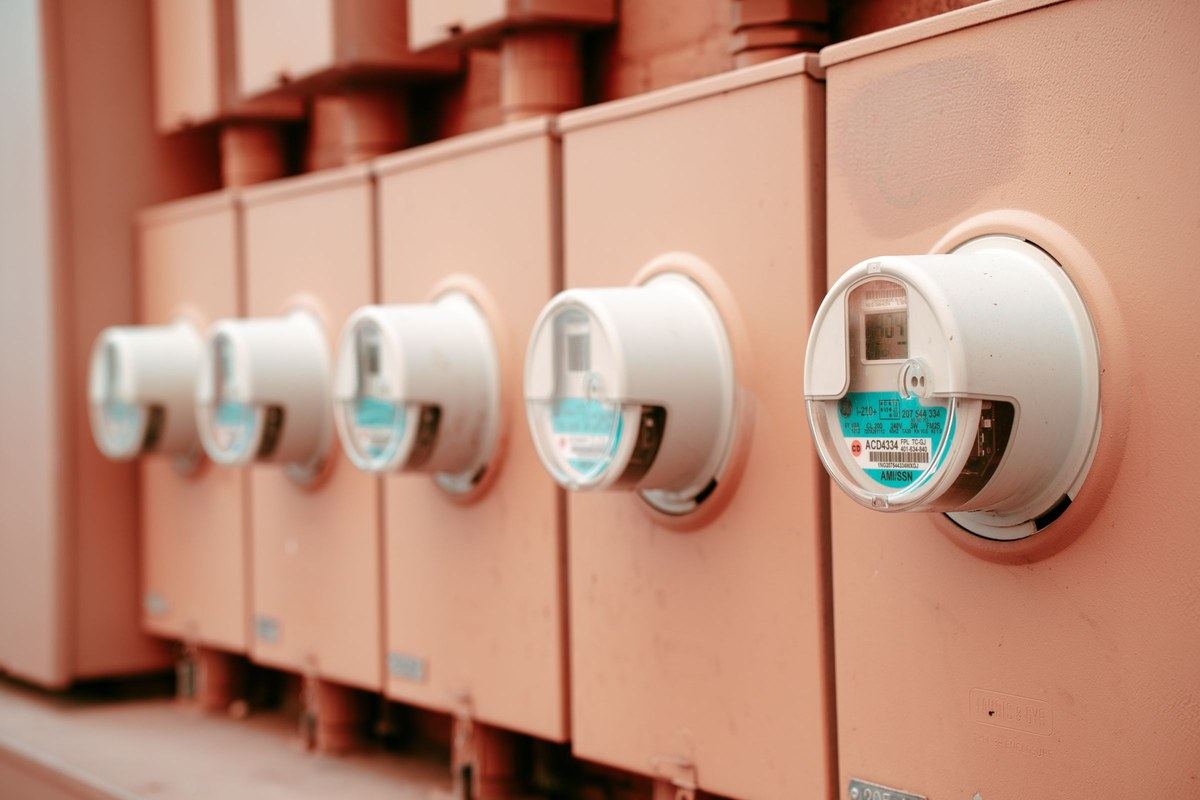
Which business rate schedules are affected
The October 1, 2026 tariff sheets apply to the four standard SCE non-residential rate families:
- TOU-GS-1 — Small business accounts where monthly peak demand does not exceed 20 kW (Sheet 91713-E).
- TOU-GS-2 — Medium business accounts where monthly peak demand is above 20 kW and under 200 kW (Sheet 91742-E).
- TOU-GS-3 — Large business accounts where monthly peak demand is 200 kW to 500 kW (Sheet 91769-E).
- TOU-8 — Very large commercial and industrial accounts where monthly peak demand exceeds 500 kW (Sheet 91626-E).
| Rate schedule | Peak demand band | Default before Oct 1, 2026 | Default from Oct 1, 2026 | Tariff sheets |
|---|---|---|---|---|
| TOU-GS-1 | Up to 20 kW | Option E with CPP | Option E (CPP optional) | 91383-E → 91713-E |
| TOU-GS-2 | Above 20 to under 200 kW | Option D with CPP | Option D (CPP optional) | 91216-E → 91742-E |
| TOU-GS-3 | 200 to 500 kW | Option D with CPP | Option D (CPP optional) | 91224-E → 91769-E |
| TOU-8 | Above 500 kW | Option D with CPP | Option D (CPP optional) | 91626-E |
Critical Peak Pricing (CPP) is now optional
Critical Peak Pricing calls 12 to 15 high-price event days per year between 4:00 p.m. and 9:00 p.m. on non-holiday weekdays. During a CPP event, energy charges jump sharply in exchange for a credit on summer demand charges. Before October 1, 2026, SCE placed most business accounts onto CPP by default.
Effective October 1, 2026, new commercial accounts are no longer defaulted onto CPP. On TOU-GS-1, Option E is the standard default without CPP; on TOU-GS-2, TOU-GS-3 and TOU-8, Option D without CPP is the standard default. However, if your building was already enrolled in CPP before October 1, 2026, your account stays on CPP unless you ask SCE to remove it (Advice Letter 5897-E, p. 3; Sheets 91713-E, 91742-E, 91769-E and 91626-E). Buildings that cannot curtail load between 4:00 p.m. and 9:00 p.m. on event days can now opt out of CPP at any time onto another eligible option.
How demand charges and customer charges moved on TOU-GS-2 and TOU-GS-3
For medium and large businesses on Option D (secondary voltage, bundled service), the October 1, 2026 tariff sheets shifted money out of summer peak demand charges and rebalanced year-round charges differently on TOU-GS-2 and TOU-GS-3:
- TOU-GS-2 Option D (above 20 to under 200 kW, secondary voltage, Sheet 91221-E → Sheet 91745-E): The monthly customer charge fell from $268.43 to $232.74/month (-$35.69/month). The year-round facilities-related demand charge moved slightly from $28.18 to $28.01 per kW (-$0.17/kW). The summer on-peak demand charge (weekdays 4:00 p.m. to 9:00 p.m., June through September) dropped from $39.60 to $25.40 per kW (-$14.20/kW, or -35.9%; $12.54/kW delivery + $12.86/kW generation). The winter mid-peak demand charge (weekdays 4:00 p.m. to 9:00 p.m., October through May) fell from $8.46 to $7.64 per kW (-$0.82/kW; $2.11/kW delivery + $5.53/kW generation).
- TOU-GS-3 Option D (200 to 500 kW, secondary voltage, Sheet 91228-E → Sheet 91771-E): The monthly customer charge rose from $780.37 to $1,188.00/month (+$407.63/month). The year-round facilities-related demand charge rose from $26.75 to $31.85 per kW (+$5.10/kW, or +19.1%). The summer on-peak demand charge fell from $38.60 to $29.90 per kW (-$8.70/kW, or -22.5%; $13.91/kW delivery + $15.99/kW generation). The winter mid-peak demand charge edged down from $10.07 to $9.85 per kW (-$0.22/kW; $2.39/kW delivery + $7.46/kW generation).
How customer charges, demand charges and energy (kWh) charges compare
The table below compares the exact June 1, 2026 (Advice Letter 5829-E) and October 1, 2026 (Advice Letters 5897-E and 5897-E-A) Option D tariff lines for TOU-GS-2 and TOU-GS-3 at secondary voltage (bundled service):
| Schedule (Option D, secondary voltage) | Charge | June 1, 2026 | October 1, 2026 | Change | Tariff sheets |
|---|---|---|---|---|---|
| TOU-GS-2 (above 20 to under 200 kW) | Customer charge (per month) | $268.43 | $232.74 | -$35.69 | 91221-E → 91745-E |
| TOU-GS-2 | Facilities-related demand (per kW, all year) | $28.18 | $28.01 | -$0.17 | 91221-E → 91745-E |
| TOU-GS-2 | Summer on-peak demand (per kW, weekdays 4 to 9 p.m.) | $39.60 | $25.40 | -$14.20 | 91221-E → 91745-E |
| TOU-GS-2 | Winter mid-peak demand (per kW, weekdays 4 to 9 p.m.) | $8.46 | $7.64 | -$0.82 | 91221-E → 91745-E |
| TOU-GS-2 | Bundled summer peak energy (per kWh) | $0.16629 | $0.19358 | +$0.02729 | 91221-E → 91745-E |
| TOU-GS-2 | Fixed Recovery Charge (FRC, per kWh) | $0.00483 | $0.00864 | +$0.00381 | 91221-E → 91745-E |
| TOU-GS-3 (200 to 500 kW) | Customer charge (per month) | $780.37 | $1,188.00 | +$407.63 | 91228-E → 91771-E |
| TOU-GS-3 | Facilities-related demand (per kW, all year) | $26.75 | $31.85 | +$5.10 | 91228-E → 91771-E |
| TOU-GS-3 | Summer on-peak demand (per kW, weekdays 4 to 9 p.m.) | $38.60 | $29.90 | -$8.70 | 91228-E → 91771-E |
| TOU-GS-3 | Winter mid-peak demand (per kW, weekdays 4 to 9 p.m.) | $10.07 | $9.85 | -$0.22 | 91228-E → 91771-E |
| TOU-GS-3 | Bundled summer peak energy (per kWh) | $0.15534 | $0.13121 | -$0.02413 | 91228-E → 91771-E |
| TOU-GS-3 | Fixed Recovery Charge (FRC, per kWh) | $0.00400 | $0.00714 | +$0.00314 | 91228-E → 91771-E |
For CCA customers on TOU-GS-2 Option D, the delivery portion of every energy (kWh) period fell on October 1, 2026 (before adding the Fixed Recovery Charge of 0.864¢/kWh and wildfire fund charge):
| Hours | Season and period | Delivery price before Oct 1 | Delivery price from Oct 1 |
|---|---|---|---|
| 4:00 to 9:00 p.m. | Summer weekdays (on-peak) and every winter day (mid-peak) | 5.67¢/kWh | 4.96¢/kWh |
| 4:00 to 9:00 p.m. | Summer weekends and holidays (mid-peak); 9:00 p.m. to 8:00 a.m. winter (off-peak) | 5.49¢/kWh | 4.84¢/kWh |
| All other summer hours | Summer off-peak | 5.45¢/kWh | 4.79¢/kWh |
| 8:00 a.m. to 4:00 p.m. | Winter super-off-peak (every day) | 5.38¢/kWh | 4.79¢/kWh |
New energy storage option (Option DD) and the 2027 solar TOU deadline
Advice Letter 5897-E also opens Option DD on TOU-GS-2, TOU-GS-3 and TOU-8 (below 2 kV) for commercial buildings with qualifying energy storage on site, with or without solar (Sheets 91743-E, 91770-E and 91628-E). Option DD adds a daily peak demand charge (billed per kW each day) and excludes demand set between 8:00 a.m. and 1:00 p.m. from the local distribution part of the facilities-related demand charge, rewarding buildings whose energy storage charges during late morning solar hours and discharges during the evening peak.
Separately, for commercial buildings with older solar systems that are still billed under grandfathered time-of-use windows (where the summer peak was midday instead of 4:00 p.m. to 9:00 p.m.), SCE's updated tariff sheets set the final sunset dates: older solar time-of-use periods end no later than July 31, 2027 for standard commercial accounts, and December 31, 2027 for qualifying school accounts (Sheet 91763-E).
Why Option D vs. Option E shifts after October 1
On TOU-GS-2 and TOU-GS-3, businesses without solar or storage can choose between Option D (higher monthly demand charges, lower per-kWh energy prices) and Option E (lower monthly demand charges, higher per-kWh energy prices). On TOU-GS-2 Option E (Sheet 91746-E, as revised by Advice Letter 5897-E-A), the year-round facilities-related demand charge is $14.27 per kW (roughly half of Option D's $28.01/kW) and time-related demand charges are much smaller, while the bundled summer on-peak energy price is $0.75579 per kWh ($0.42385 delivery + $0.33194 power supply), compared with $0.19358 per kWh on Option D. Because the October 1, 2026 update moved both demand and energy prices on Option D and Option E, the break-even load factor between the two options moved as well.
What to check on your next SCE bill
- Read the "Rate" line on page 1 or page 3 of your bill. Check whether your account lists
TOU-GS-1,TOU-GS-2,TOU-GS-3, orTOU-8, which option letter (Option D,Option E,Option DDfor qualifying energy storage,Option R) is active, and whetherCPPis still attached. - Compare your monthly peak kW to your monthly kWh. On TOU-GS-3 Option D, the facilities demand charge rose to $31.85/kW and the customer charge rose to $1,188.00/month, which hits winter bills and low-load-factor buildings hardest. On TOU-GS-2, compare Option D ($28.01/kW facilities demand, $0.19358/kWh summer peak energy) against Option E ($14.27/kW facilities demand, $0.75579/kWh summer peak energy).
- Check whether your October bill is prorated. Because the rate change took effect on October 1, 2026, any billing cycle that started in September and ended in October splits your usage and demand charges across two sets of tariff numbers — one for days before October 1 and one for days on and after October 1.
Frequently asked questions
Did SCE business rates go up or down on October 1, 2026?
Both, depending on your schedule and when you use power. Summer peak demand charges fell on TOU-GS-2 and TOU-GS-3. On TOU-GS-2 Option D, the customer charge and the year-round facilities demand charge also edged down, while bundled summer peak energy rose by 2.7 cents per kWh. On TOU-GS-3 Option D, the year-round facilities demand charge rose by $5.10 per kW and the monthly customer charge rose by $407.63, so winter bills on TOU-GS-3 Option D are generally higher than before.
Was my business automatically taken off Critical Peak Pricing (CPP)?
No. Making CPP optional means new accounts are not defaulted onto it and existing accounts can leave at any time. If you were on CPP before October 1, 2026, you stay on it unless you ask SCE to opt out (Advice Letter 5897-E, p. 3).
What is Option DD on SCE business rates?
Option DD is SCE's new rate option for commercial buildings with qualifying energy storage on site (with or without solar). It is open to accounts on TOU-GS-2, TOU-GS-3 and TOU-8 below 2 kV starting October 1, 2026 (Advice Letter 5897-E, Sheets 91743-E, 91770-E and 91628-E).
When will SCE change business rates again?
SCE's filing notes a consolidated rate change expected on January 1, 2027 (Advice Letter 5897-E, pp. 6-7). The dollar amounts for January 2027 have not been filed yet.
Sources & tariff citations
- CPUC Decision 26-04-033 (SCE 2025 General Rate Case Phase 2, adopted April 30, 2026; issued May 4, 2026)
- SCE Advice Letters 5897-E (filed September 29, 2026) and 5897-E-A (filed October 19, 2026), effective October 1, 2026 (Sheets 91713-E, 91742-E, 91743-E, 91745-E, 91746-E, 91763-E, 91769-E, 91770-E, 91771-E, 91626-E, 91628-E)
- SCE Advice Letter 5829-E (effective June 1, 2026; Sheets 91383-E, 91216-E, 91221-E, 91224-E, 91228-E)
- SCE Commercial Rate Schedules & Tariff Books (retrieved October 2026)
Related guides
- How SCE time-of-use periods and demand charges work for businesses
A plain guide to SCE's peak hours for business rates and how the two kinds of demand charges are billed, using rates in effect Oct 1, 2026. - Why is my business electric bill so high?
Business electric bills are high for reasons beyond how many kWh you use. Demand charges, rate class, peak hours and who supplies your power all matter. - Why did my business electric bill go up?
A business electric bill can rise after a rate change, the June 1 season switch, one demand spike or a longer billing cycle. Here is what those changes mean. - What is a demand charge? SCE business demand charges explained
What is a demand charge? It is the part of a business bill set by your peak kW. See how SCE measures it, with a worked TOU-GS-2 example at Oct 1, 2026 rates. - SCE Option D vs Option E: which business rate option fits your building?
SCE Option E or Option D? Compare both on TOU-GS-2 and TOU-GS-3 with rates effective Oct 1, 2026, plus a worked July example that shows the math.